Find your frame size
Read your frame measurements, compare the same distances, and check how the frame fits.
Read the numbers inside the arm
Example size code
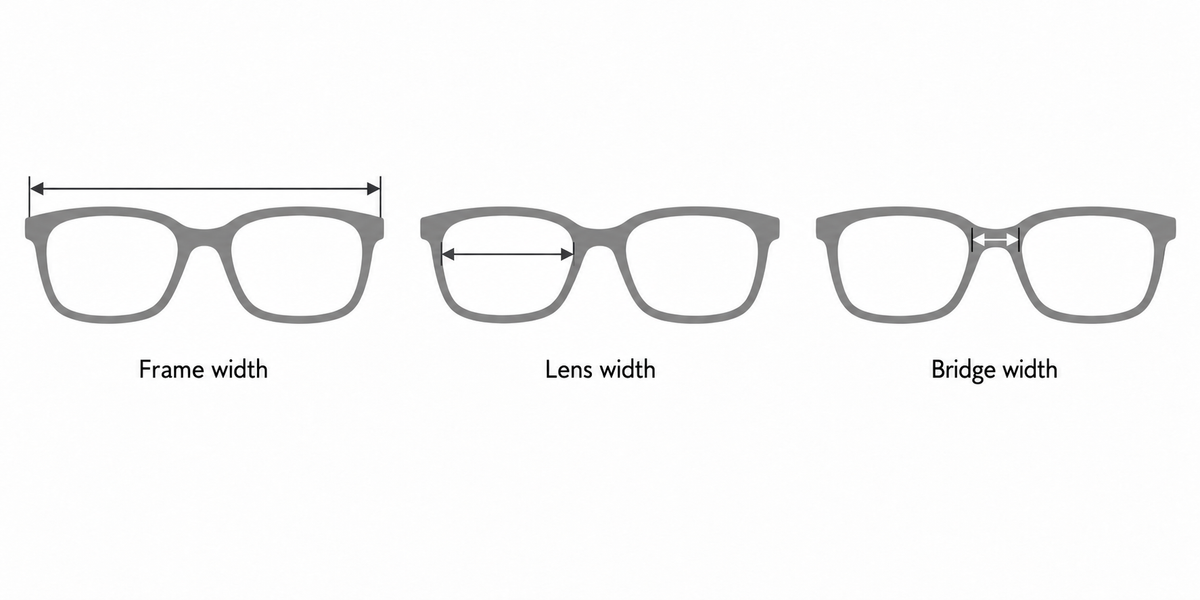
Understand the five measurements
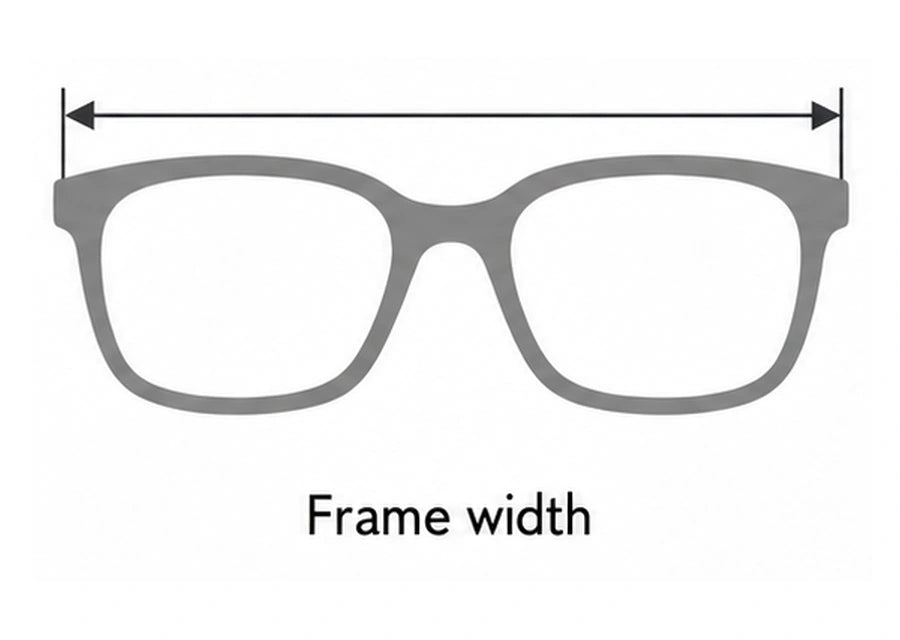
Total frame width
The span across the frame front. Outside-edge width and hinge-to-hinge width use different endpoints. Do not calculate outside width by adding two lens widths and the bridge.

Lens width
The horizontal width of one lens opening at its widest point, excluding the surrounding rim. It describes one lens, not the full pair of glasses.
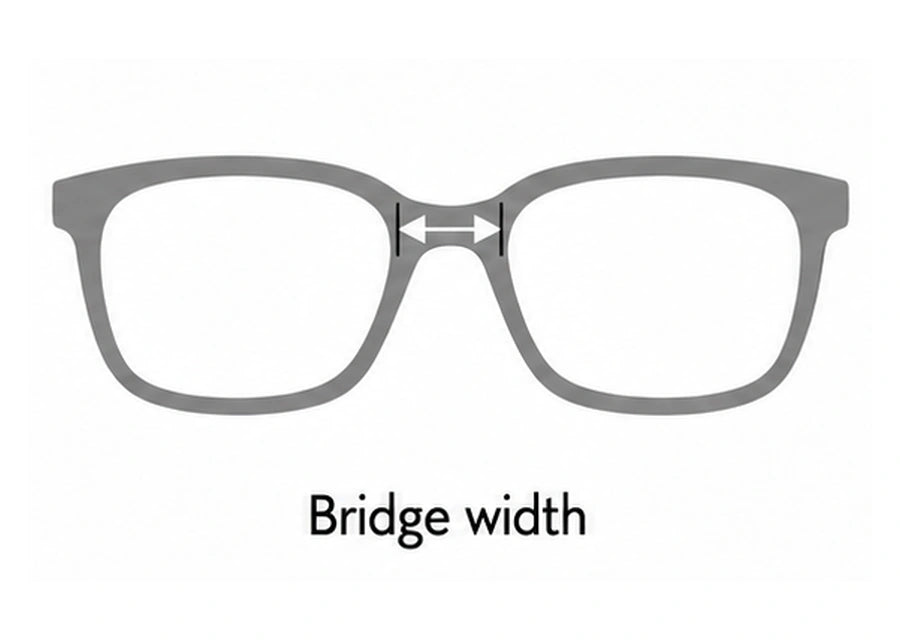
Bridge width
The marked distance between the lens openings. Compare the bridge shape too: molded plastic and separate nose pads can feel different with the same listed number.
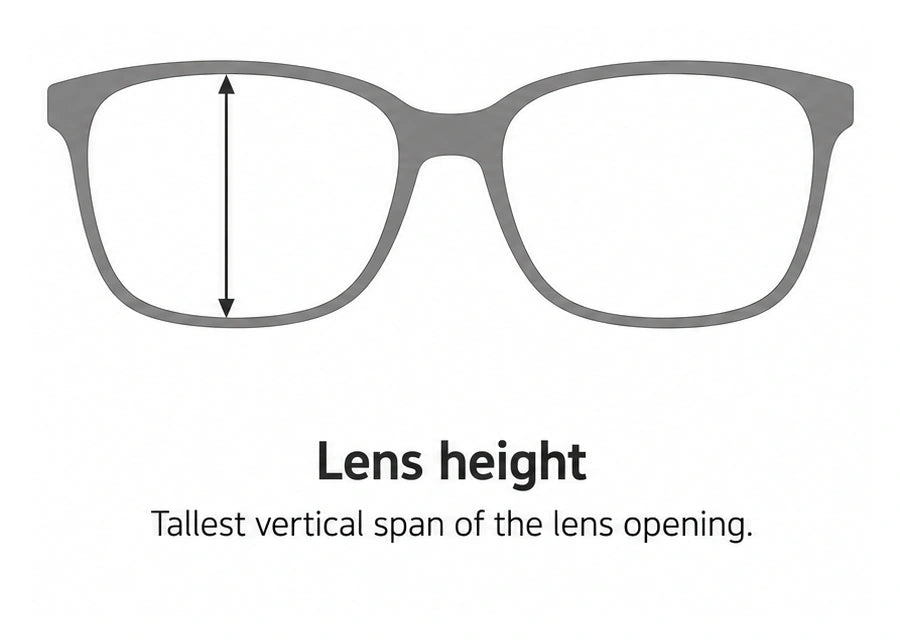
Lens height
The tallest part of one lens opening, excluding the rim. It changes the proportions and cheek clearance.
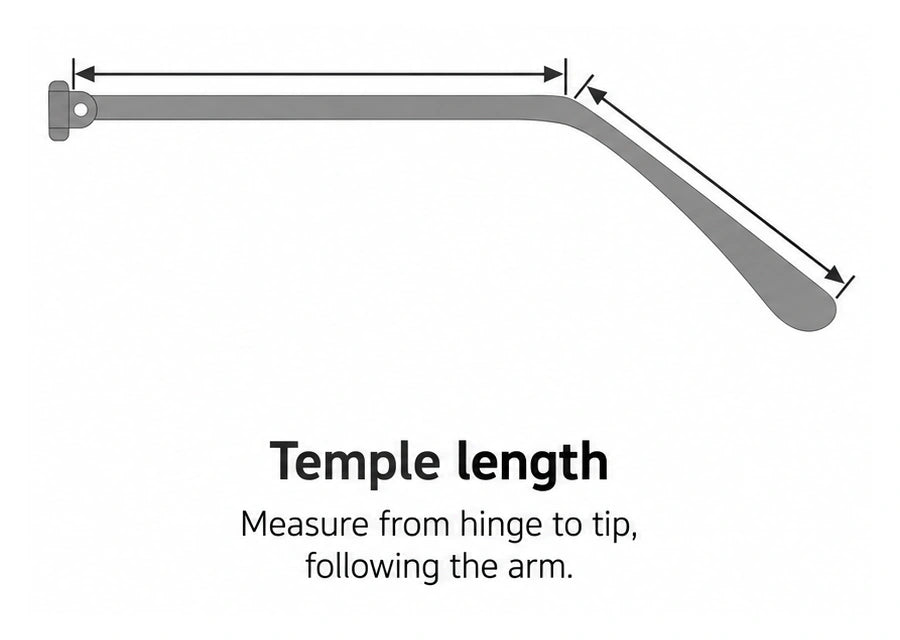
Temple length
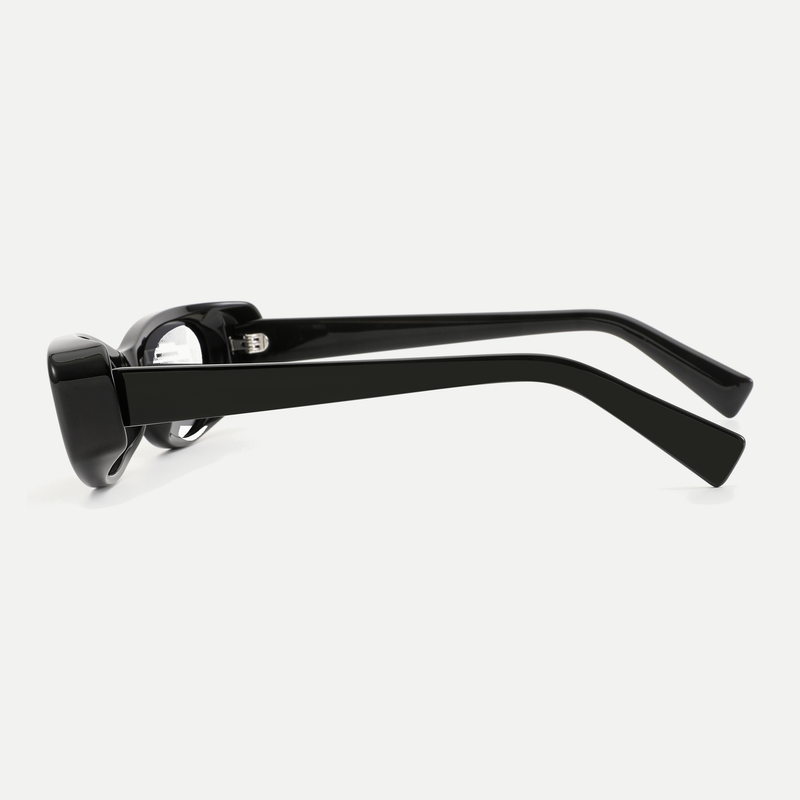
The length of the arm from hinge to tip, including its curved end. It is not a straight-line distance to the back of your ear. Check the side view as well as the number.
Compare a comfortable pair
- Start with glasses that feel comfortable after a few hours of wear.
- Record their printed size code and compare the same marked distances in the new frame's size diagram.
- Check bridge shape, cheek clearance and how the arms sit behind your ears.
Matching dimensions are a useful starting point. Bridge shape and frame design also affect fit.